
Clear aligners: treatment and follow-up
Clear, removable aligners move teeth in planned stages. Their discreet appearance does not remove the need for an assessment, regular checks and a retention phase.
Book an assessment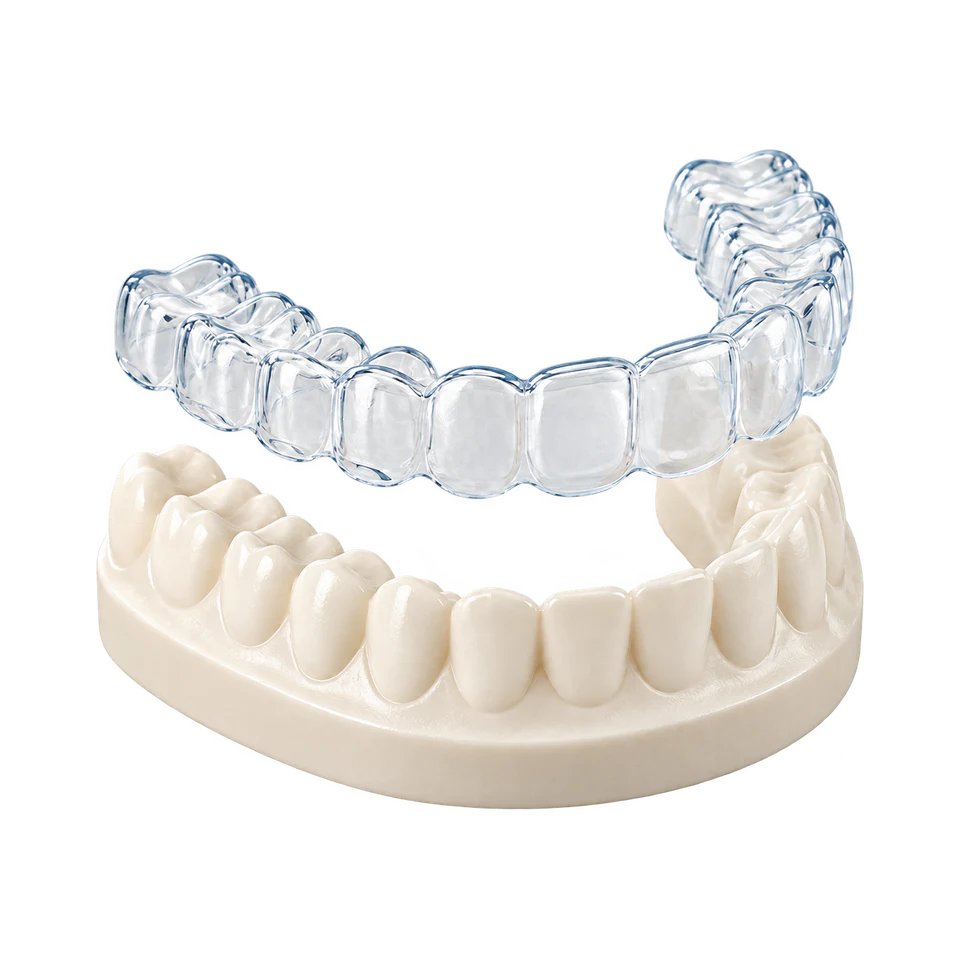
This information is general. It cannot establish whether this care is right for you, replace an examination or predict an individual result.
Reviewed by Dr Fabio Cunha, .
Key points
- Treatment uses a series of removable aligners to guide planned tooth movements.
- An assessment considers the teeth, gums, bite and your aims before options are compared.
- Wearing and caring for the aligners as instructed, together with follow-up visits, affects the course of treatment.
- Retention may be needed after treatment to reduce the risk of teeth moving back.
Understanding aligners
Clear aligners are removable trays used in a planned sequence to move teeth. Whether they are suitable depends on the movement required and the condition of your mouth. They are one orthodontic option, not a solution for every situation.
The assessment
The dentist examines the teeth, gums and bite and discusses what you would like to change. Existing dental work and any problems needing care first are part of the plan. A photograph alone cannot show whether aligners are appropriate.
Comparing options
Fixed braces and other approaches may be considered alongside aligners. The discussion covers what each option can achieve, its limits, the commitment it requires and the likely need for retention.
The treatment pathway
If aligners are chosen, the plan sets out the intended movements and the sequence of trays. Reviews allow the dentist to check progress and adapt the plan if necessary. A proposed digital result is a plan, not a guaranteed outcome.
Wear and follow-up
Follow the instructions given for wearing, removing and cleaning the trays. Contact the practice if a tray is lost, damaged or no longer fits. After the active phase, a retainer may be recommended to help maintain the position achieved.
Costs and decision
The duration and price depend on the assessment and the proposed plan. Ask for a personalised quotation and discuss alternatives, follow-up and retention before deciding.
Clear aligners: common questions
How do I know whether aligners are suitable for me?
An orthodontic assessment of your teeth, gums, bite and treatment goals is needed.
Can aligners cause discomfort?
Pressure or temporary discomfort can occur when trays are changed. Tell your dentist about persistent pain or a tray that does not fit.
Can I eat while wearing aligners?
Follow the instructions for removing and cleaning your trays around meals and drinks.
How long should I wear aligners each day?
Your dentist will give you instructions for your plan. The required wear time cannot be set from this page.
What if an aligner is lost or broken?
Contact the practice for advice before moving to a different tray.
How long does aligner treatment take?
It varies with the movements planned and progress during treatment. An assessment is needed for an estimate.
Will I need a retainer afterwards?
Retention is commonly discussed after tooth movement to reduce the risk of relapse. Your dentist will recommend an individual plan.
How much do aligners cost in Switzerland?
The price depends on the treatment plan and follow-up. Request a personalised quotation.
General medical sources
Information specific to your situation is provided during your consultation.
- Université de Genève, Division d’orthodontie
- British Orthodontic Society, Clear aligners
- U.S. Food and Drug Administration, Clear Dental Aligners
- Office fédéral de la santé publique, Soins dentaires
Sources listed on the corresponding French page.
Let’s get acquainted.
Choose an appointment online or contact reception.
Discussing
Clear aligners
Have a question about this care? The practice welcomes you in Chêne-Bougeries, by appointment.
Contact and directionsVisiting the practice
Parking is available at the practice. Call reception at the barrier to access the car park.
Get directions