
Dental implants in Chêne-Bougeries
Learn about dental implants, possible alternatives and the treatment pathway before making a decision.
Book an assessment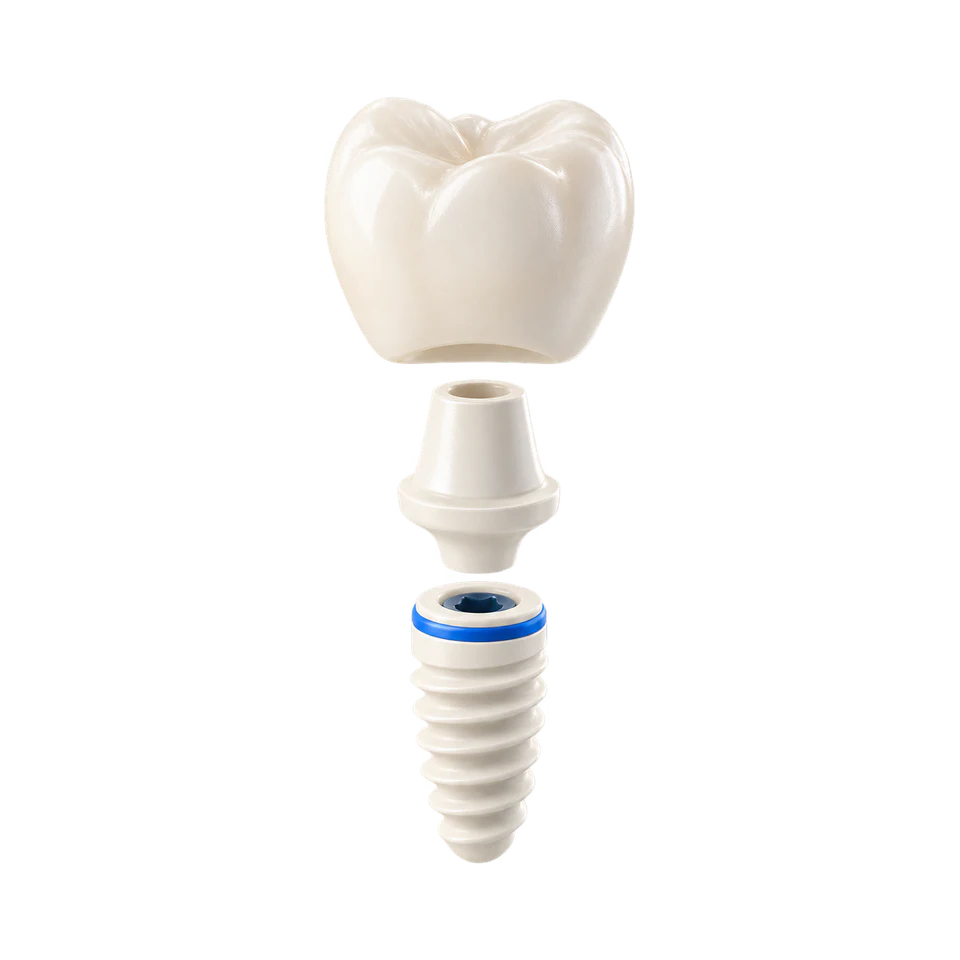
This information is general. It does not replace a diagnosis, a personalised cost estimate or a treatment plan established after an examination.
Reviewed by Fabio Cunha, .
Key points
- A dental implant replaces a missing tooth root and supports a dental restoration.
- Whether it is suitable depends on your general health, your mouth, the available bone and your expectations.
- The treatment pathway generally includes assessment, planning, a surgical phase, restoration and follow-up.
- Alternatives, risks, costs and maintenance should be discussed before any decision is made.
What is a dental implant?
An implant is an artificial root placed in the jawbone. It can support a crown, bridge or denture.
The visible part that replaces the tooth is not the implant itself. The reconstruction usually consists of the implant, a connecting component and the chosen dental restoration.
This option may be considered when one or more teeth are missing. Depending on the situation, a bridge, a removable denture or no immediate treatment may also be among the options. There is no single answer that is right for everyone.
Assessment comes before any treatment proposal
A consultation helps the dentist understand your situation, examine the tissues and compare the options without reaching a conclusion remotely.
Tell the dentist about any health condition, medication or smoking. This information may change how the treatment is planned or lead to a discussion about another option.
- Your medical history, the medication you take and any treatment currently under way.
- The condition of your teeth, gums and the area where a tooth needs to be replaced.
- The amount and quality of bone, using the examinations considered necessary.
- Your expectations, priorities and the possible dental restoration options.
- Individual factors that may affect the treatment, its risks or its follow-up.
A treatment pathway shaped around your situation
The number of appointments and the exact order of the stages vary. Your plan is explained before treatment begins.
1. Assessment
Discussion of your needs, a clinical examination and any additional examinations suited to the situation.
2. Planning and cost estimate
Presentation of the options, limitations, risks and estimated cost before you make a decision.
3. Surgical phase
Placement of the implant according to the agreed plan. An additional procedure may sometimes be considered, but it is not always necessary.
4. Healing and checks
Follow-up appointments allow the tissues and the integration of the implant to be checked before the final restoration.
5. Dental restoration
A crown, bridge or denture is made according to the planned reconstruction.
6. Maintenance
Daily oral hygiene and suitable professional checks remain necessary over the long term.
A possible option, with limitations to consider
An implant may help restore chewing function and the appearance of a missing tooth. However, no result can be guaranteed.
Like any surgical and restorative treatment, implant dentistry involves risks. These may include infection, healing, implant integration, neighbouring tissues or wear of certain components. Inflammation around the implant may also develop during follow-up.
Your personal risk depends on several factors. Before asking for your consent, the dentist must explain the expected benefits, reasonable alternatives and the risks that apply to your situation.
The cost depends on the agreed plan
A reliable amount requires an assessment. The estimate depends in particular on the number of implants, the restoration and any additional treatment that may be needed.
The practice provides a personalised cost estimate after the assessment. Prices from the previous website are not reproduced until an updated fee schedule has been confirmed.
In Switzerland, dental treatment is not generally covered by compulsory health insurance. Exceptions exist in specifically defined situations. If a tooth was lost because of an accident, first check with the relevant insurer. Any supplementary cover depends on your policy.
View fees and payment informationFollow-up is part of the treatment
An implant and its restoration require regular oral hygiene and checks suited to your situation.
Cleaning methods must be suited to the reconstruction. There is no universal schedule for check-ups: their frequency depends in particular on the condition of the gums, oral hygiene and individual risk factors.
If you are concerned about an unusual symptom or a change in the restoration, contact the practice for advice suited to your situation. A general information page cannot assess it.
Explore dental hygiene careDental implant FAQs
What is the difference between an implant and a crown?
The implant replaces the root and sits in the bone. The crown is the visible dental restoration that replaces the tooth. A crown can be fitted to an implant or, in other situations, to a prepared natural tooth.
Are dental implants suitable for everyone?
No. A clinical and radiographic assessment is required. The condition of the mouth, the available bone, general health, certain medications and lifestyle habits may influence whether an implant is appropriate.
How long does dental implant treatment take?
The duration depends on the number of stages, healing and any preliminary or additional treatment. The schedule is determined after the assessment, so this page does not give a universal timeframe.
Is dental implant placement painful?
Anaesthesia and comfort management are discussed before the procedure. Sensations or discomfort may occur afterwards. Instructions and options suited to your situation must be provided by the practitioner.
How much does a dental implant cost?
The cost depends on the clinical situation and the planned reconstruction. A detailed estimate is prepared after the examination. This page does not present any outdated or unconfirmed price.
How should a dental implant be maintained?
Maintenance combines daily cleaning of the area with regular professional follow-up. The recommended cleaning aids and frequency of checks are adapted to the restoration and your oral health.
General medical sources
The information that applies to your situation remains the information provided during your consultation.
- Swiss Dental Association SSO: Dental treatment methods (French)
- SSO: Quality guidelines for oral surgery and implant dentistry (French)
- Federal Office of Public Health: Dental treatment and compulsory health insurance (French)
- Guy’s and St Thomas’ NHS Foundation Trust: Dental implants
Sources consulted on 7 September 2026.
Let’s get acquainted.
Choose an appointment online or contact reception.
Discussing
Dental implants
Have a question about this care? The practice welcomes you in Chêne-Bougeries, by appointment.
Contact and directionsVisiting the practice
Parking is available at the practice. Call reception at the barrier to access the car park.
Get directions